

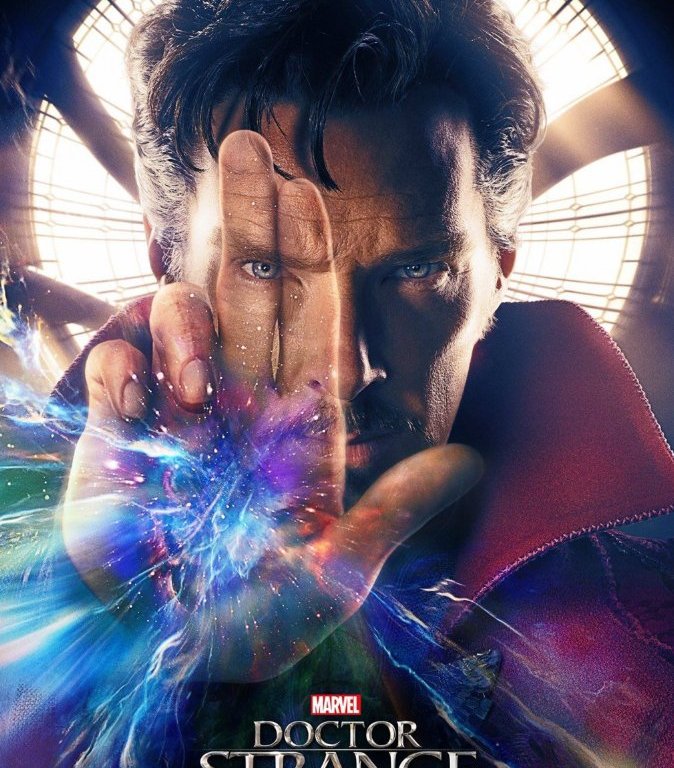

The Avengers have proved more than capable of defending Earth from physical threats, but other heroes are needed to thwart enemies from the mystical realm. Doctor Strange is an enjoyable introduction of the Sorcerer Supreme, featuring inventive visuals and a strong lead performance by Benedict Cumberbatch. Despite its rushed, pedestrian narrative, Doctor Strange is able to stand out in the ever expanding Marvel Cinematic Universe with novel elements of magic and the multiverse. It’s a welcome addition to an increasingly crowded superhero genre.

There were “Inception ripoff” accusations in reaction to trailers and posters showing city skylines breaking the laws of physics, but it may be more accurate to say both movies take inspiration from M. C. Escher. The visual concept is also used for different reasons. Instead of practicing dream manipulation, Doctor Strange characters reorient buildings onto different planes in order to kill and run away from each other. The result is a creative set of chase scenes, utilizing changes in gravity and geometry to put an original twist on a ubiquitous action movie staple. Another standout sequence features events of mass carnage being rewound in slow motion. Doctor Strange‘s “Best Visual Effects” Oscar nomination is well deserved.
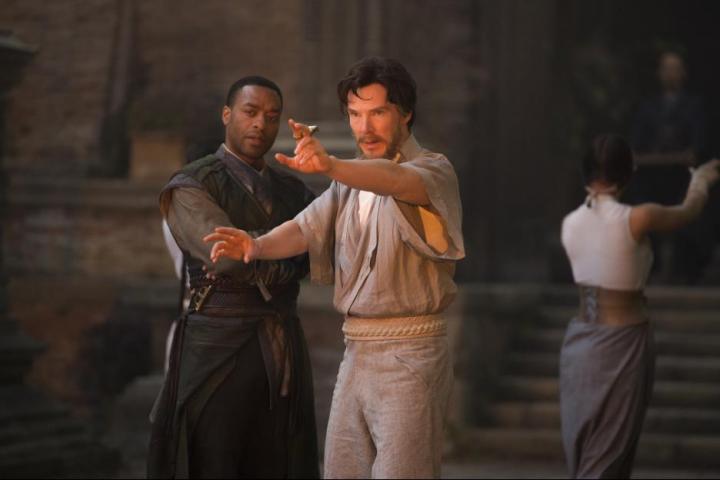
Sporting an American accent, Benedict Cumberbatch is impressive as renowned neurosurgeon turned superhero Stephen Strange. It’s a familiar character arc, but over the course of the film Cumberbatch competently portrays Strange as a narcissist, then a broken man following a tragedy, then a hero who is at first reluctant but eventually embraces his duty. There are shades of Tony Stark, Sherlock Holmes, and Dr. Greg House in his interpretation, not bad company to be in. Strange’s transition from complete magic novice to capable sorcerer doesn’t feel quite as earned, as his progress is extremely fast and there are some contradictions regarding what it’s attributed to. Chiwetel Ejiofor and Benedict Wong are adequate as friendly master sorcerers, but they’re undermined by Strange’s remarkable ascension to seemingly becoming their equals.
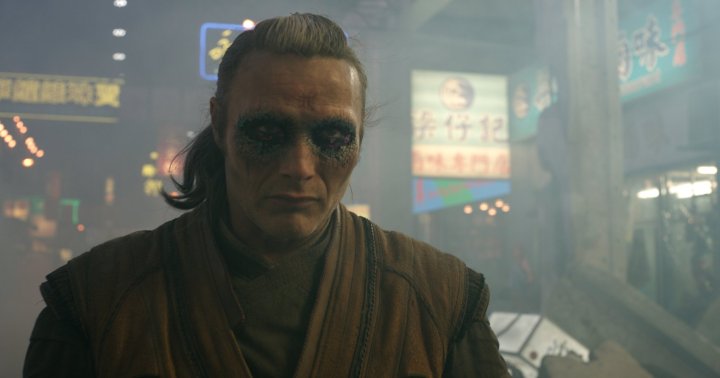
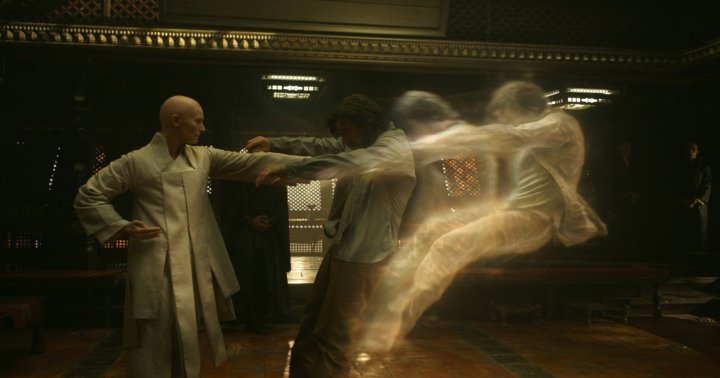
Tilda Swinton plays the Ancient One with subtle intensity. It’s also a bit of a twist on the archetype, as she has less patience and moral clarity than the typical master / guru. Rachel McAdams’ character serves little purpose beyond humanizing Strange’s character in limited screentime, though she refreshingly isn’t a damsel in distress. Mads Mikkelsen’s Kaecilius unfortunately blurs together with other forgettable Marvel villains; he does share some funny banter with Strange, but the most memorable thing about him might be his eye makeup. The big bad, Dormammu (voiced by Cumberbatch), fares similarly. His cartoonish appearance is unimpressive and at odds with the rest of the movie’s overall look. Strange’s encounter with Dormammu diverges from the typical climactic fight and is somewhat clever, though some may see it as anticlimactic.
Doctor Strange does a great job of combining Ancient Eastern and modern Western aesthetics, such as when robed sorcerers cast spells in the middle of cars in contemporary city streets. Talk of mystical philosophy, wifi passwords, and Beyonce under the same roof brings an amusing accessibility. The humor hits more often than misses, and indicates a self awareness that some of this material is inherently silly, but not to the point where it becomes a farce. Overall, Doctor Strange lays a solid foundation for its title character to don his signature cape in further adventures.
 Dogomon