



At one point, the main character of Assassin’s Creed asks himself, “What the fuck is going on?” I was wondering the same thing as the credits started rolling. The realization set in earlier that an impressive cast and production values were horribly wasted. The culprit is a script that completely fails to establish interesting characters or plot. Perhaps there were warning signs, as the movie shares two writers with a similarly lifeless 2016 entry, Allegiant. The result is a thoroughly unsatisfying adaptation of the popular video game series. I can’t speak for how closely it adheres to the source material, but as a standalone film, Assassin’s Creed is an utter disappointment.

Playing a duel role, Michael Fassbender does what he can with the little he has to work with. In the present, he’s Callum Lynch, a death row prisoner who’s rescued and then held by an Illuminati-like organization called the Templars. By connecting Callum to groundbreaking technology called the Animus, they intend to access the memories of one of their sworn enemies in 1492, who happens to be one of Callum’s direct ancestors (and doppelganger), Aguilar de Nerha. The Templars hope that these flashbacks will lead to the location of an artifact containing the genetic code for free will.
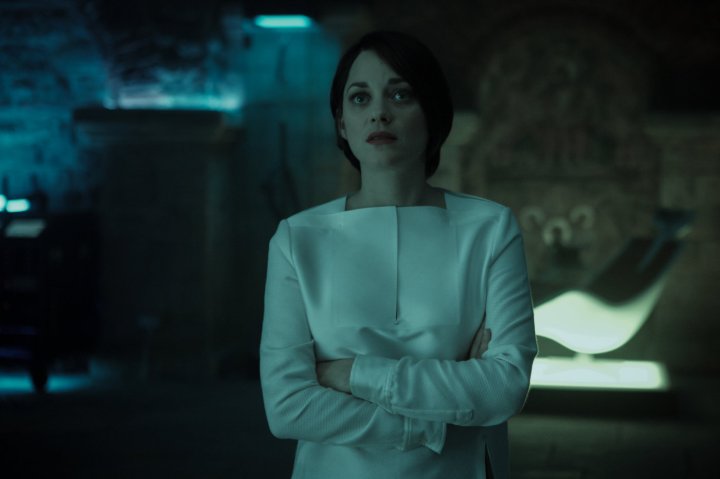
It’s an interesting premise as far as the nefarious goals of secret societies go, but the execution falls flat. Alan Rikkin (Jeremy Irons) and Sofia Rikkin (Marion Cotillard) are a father and daughter who have key Templar roles, but their goals and motivations are poorly explored. Neither of Fassbender’s characters leaves much of an impression. Callum’s past reeks of tragedy, particularly his relationship with his father, but instances of development speed through as if they’re disposable plot points. It doesn’t help that Callum’s interactions with his fellow prisoners are at times borderline nonsensical. Aguilar is worse, an empty shell whose main purpose seems to be the anchor for all the major action sequences. The dialogue between him and his partner, Maria (Ariane Labed), solely consists of solemn pronouncements showing their dedication to the Assassins. Lacking an ounce of personality makes it hard to find a reason to root for them, besides that they belong to a group that opposes the evil one.
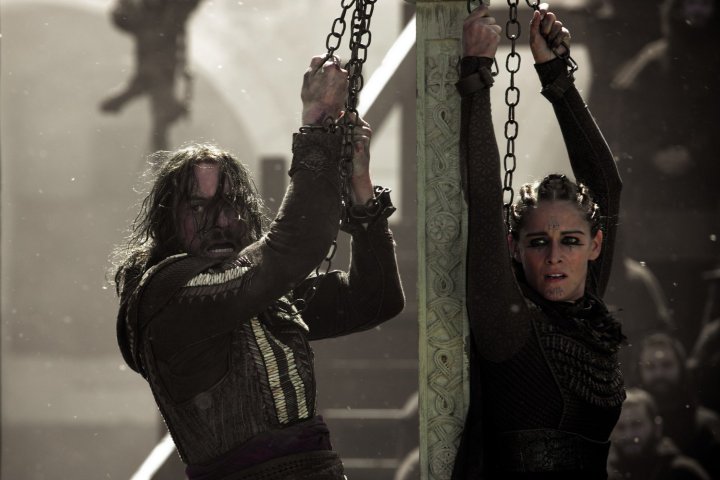
Assassin’s Creed‘s 1492 scenes are its best, echoing the consensus opinion that the game storylines in the past are better than the ones in the present. Impressive cinematography brings medieval Spain to life, accompanied by well choreographed chase and fight sequences. It’s a shame that these strengths are negated by the aforementioned paper-thin characters and the fact that Animus scenes take up a small portion of the running time. Excessive cuts showing Callum “acting out” Aguilar’s memories compound the problem; the audience probably gets the point by the fifth time.

Any hope that the lurching momentum established by Assassin’s Creed‘s first two acts can be salvaged is shattered by its anti-climactic conclusion. Critical story developments leave barely any time to process them in order to rush to a remarkably limp finale. Things are largely left open for a sequel; it’s just too bad I’d stopped caring about what was happening long before. Those who thought Assassin’s Creed would be a rare high quality, high budget video game movie and were instead left frustrated should heed the words of Jay-Z – “On to the next one.”
 Dogomon